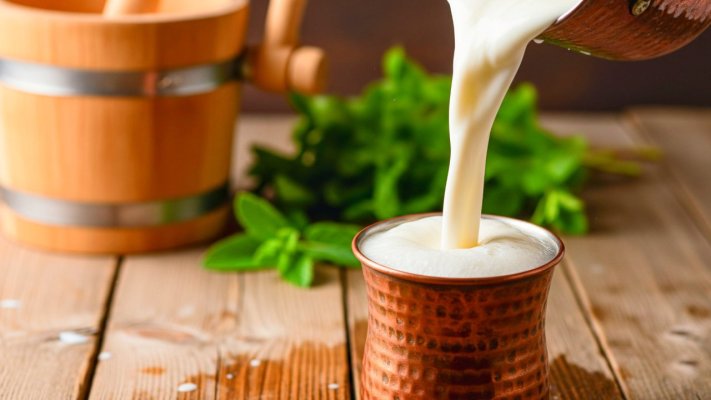
The Cool Secret of the Highlands: Churned Butter and Ayran
If you hear a rhythmic, deep sound coming from a cool corner of a house in the Seydikemer highlands, one of the most fundamental rituals of Yörük cuisine is taking place: the churn is in motion. This sound is not just the sound of a task; it is the audible form of purity, labor, and nature's generosity. Because at the end of this rhythmic churning, the golden-yellow butter that crowns the table, and the frothy churned ayran, the most refreshing drink imaginable, are born.
Step 1: The Heart of the Process: The Wooden Churn
The main protagonist of this process is the wooden churn (yayık), which usually resembles a tall, narrow barrel made from juniper or pine wood. Inside it is a long rod with a paddle-like plunger at the end (bıçak). The unique woody scent of the churn infuses the butter and ayran, giving them a distinct aroma. Although electric churns are common today, the taste from the traditional method is still unmatched.
Step 2: The Main Ingredient: Matured Highland Yogurt
Everything begins with high-quality, full-fat yogurt, made from the milk of goats and sheep that graze freely in the highlands. For making butter, it is not fresh yogurt that is typically used, but rather yogurt that has been left for a day or two to mature and develop a slight tanginess. This not only helps the butterfat to separate more easily but also makes the resulting ayran more flavorful.
Step 3: The Rhythmic Labor: The Churning Process
This stage requires patience and strength.
- The matured yogurt is placed in the churn. A specific amount of cold water is added, depending on the consistency of the yogurt. The coldness of the water is the most critical secret to helping the fat solidify and clump together.
- The mass of butter floating on the surface of the ayran is carefully scooped out by hand.
- The fresh butter is immediately placed in a bowl of ice-cold water. In this cold water, it is kneaded several times to "wash" it and remove any remaining buttermilk. This washing process ensures the butter has a pure taste and a longer shelf life.
- The washed butter, with its water squeezed out, is salted if desired and shaped into balls or blocks, ready for storage.
- Its Taste: It is slightly sour, crisp, extremely refreshing, and very easy to drink. You might still see tiny flecks of butter floating in it.
The lid of the churn is closed, and the churning process begins by moving the plunger (bıçak*) up and down with a steady rhythm. This process can sometimes last for over an hour without a break. The sound of the churning, which is initially thick and muffled, becomes more fluid and watery as the process progresses.
Step 4: The Magic Moment: The Butter Appears
At the end of the patient churning, the magical moment occurs. You can feel the sound of the churn change, the plunger moves more freely, and tiny, yellow globules of butter begin to appear on the surface of the liquid. As the churning continues, these globules merge and grow, eventually forming a large, solid mass of butter on the surface.
Step 5: Harvesting the Gold: Washing the Butter
Step 6: The Gift Left Behind: The Real Churned Ayran
The liquid remaining in the churn after the butter is collected is very different from the ayran sold in stores. This is the real churned ayran (traditional buttermilk).
Its Use: It is the best drink to quench your thirst and recover from the fatigue of the work just done. It is also used to make a type of curd cheese (çökelek*) or in some pastries.
Conclusion: The process of churning is one of the best examples of the "waste nothing" philosophy of the Yörük culture. From a single ingredient, yogurt, two invaluable products are created: energy-rich butter for meals and cooking, and a probiotic-rich, refreshing drink. It is the most delicious result of a production process that is pure, unadulterated, and respectful of nature's cycles.
Reviews
No reviews yet