The Flavor That Brings the Summer Sun to the Winter Table: Traditional Highland Tarhana
When late August arrives in the Seydikemer highlands, the air is filled not only with cooling evenings but also with the tart aroma of ripe tomatoes, peppers, and yogurt. This scent heralds an age-old tradition: the making of Tarhana. Tarhana is much more than a soup that warms us in the freezing cold of winter; it is the art of capturing all the abundance, sun, and flavor of summer in a handful of powder. Here is the patiently crafted story of that nutritious and healing delicacy:
Step 1: The Foundation of the Mix: The Generous Ingredients of the Highlands
The flavor of traditional highland tarhana comes from the natural and pure quality of every ingredient used. No factory products are allowed in this mix.
- Vegetables: Sun-ripened tomatoes fresh from the field, fleshy Kapia peppers, onions, and sometimes boiled chickpeas form the vegetable base of the mix.
- Dairy: The key to tarhana's fermentation and its unique tangy taste is thick, full-fat yogurt from goat's or sheep's milk, with its whey removed.
- Herbs and Spices: The mix must include medicinal plants gathered from the mountains, such as wild mint, thyme, and the local tarhana herb.
- The tarhana mixture is covered with a clean cloth and left to ferment in a cool place. This process can take between 3 and 7 days, depending on the air temperature.
- During this time, the mixture ferments thanks to the yeast in the yogurt. It must be kneaded once a day, usually in the morning. Kneading ensures a homogeneous fermentation and prevents the mixture from overflowing.
- The completion of the fermentation process is signaled when the mixture rises, its sour and sharp smell fills the air, and its flavor has settled. This fermentation not only gives tarhana its delicious taste but also turns it into a probiotic-rich, healing food.
- Large, white cloths called "çul" are spread out in a clean, sunny area.
- The fermented, soft mixture is poured onto these cloths with a spoon, spread out in small, thin pieces.
- Left to dry under the sun, the tarhana pieces are flipped over as one side dries to ensure the other side dries as well.
- At this stage, neighboring women often come together and, accompanied by conversation, crumble the collected tarhana pieces by hand.
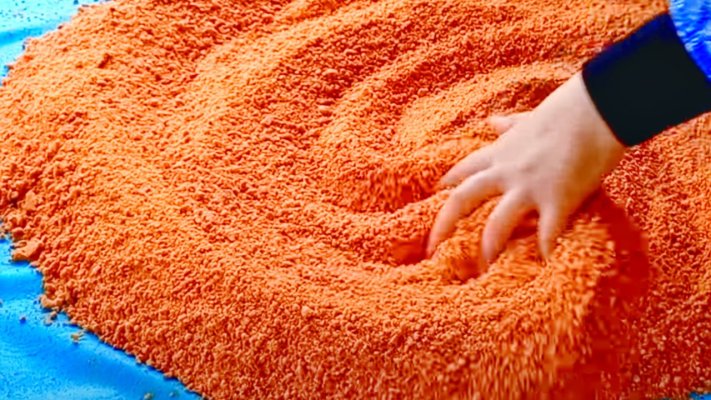
- The crumbled tarhana is finally passed through a large-holed sieve called a "kalbur" to turn it into a fine, sand-like powder. Any large pieces left in the sieve are crumbled again. This ensures the tarhana will dissolve easily in water during the winter.
Grain: The grain that gives tarhana its heartiness is usually cracked wheat (yarma or dövme*) or whole wheat flour from the region's own wheat. Tarhana made with cracked wheat has a more granular and fibrous texture.
Step 2: Cooking and the Great Union
The vegetables are chopped and cooked in a large cauldron over low heat, without adding any water, until they release and reabsorb their own juices. This vegetable puree, once cooled, is combined with yogurt, cracked wheat or flour, and herbs in a large basin called a "tekne." All ingredients are kneaded by hand until they are completely blended.
Step 3: The Soul of Tarhana: Fermentation
This is the most critical stage, the process that makes tarhana what it is.
Step 4: Meeting the Sun: Drying
Once its fermentation is complete, the tarhana is ready to meet the sun. This process usually takes place on the rooftops or in the large courtyards of homes.
Step 5: The Final Touch: Crumbli and Sifting
When the tarhana pieces are completely dry on the outside but still slightly moist inside (like a cookie), they are collected from the cloths.
Step 6: Winter's Treasure: Storage
The powdered tarhana is aired out in the shade on a cloth for another day to ensure any remaining moisture has evaporated. Once completely dry, it is stored in breathable cloth bags in a cool, dry place like a pantry.
Conclusion: When you have a spoonful of tarhana soup, you are actually tasting a week's worth of labor, the warmth of the sun, the bounty of the earth, and the thousand-year-old preservation knowledge of the Yörük culture. That bowl is not just a soup; it is a delicious victory against winter.
Reviews
No reviews yet